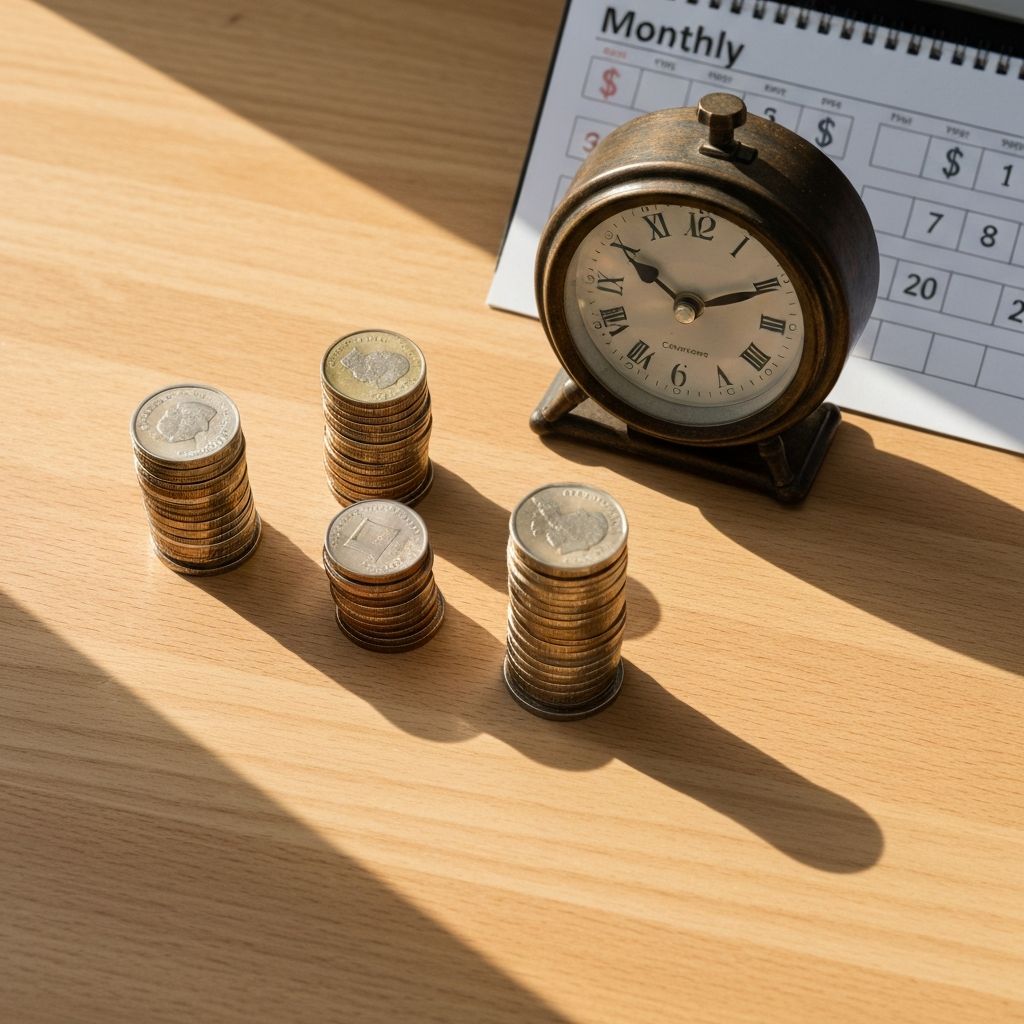
Starting to Invest With $100: An Honest Beginner's Guide
Seven realistic ways to begin investing with very little money — and the few mistakes that almost everyone makes at the start.
 By Rohan Mehta10 min read
The first money I ever invested was $87. I'd been telling myself for about two years that I'd "start investing soon" — code for "once I figure it all out" — and one Sunday I just opened a brokerage app, transferred over what was in my checking account, and bought one share of a total-market index fund. The whole thing took eleven minutes. I had imagined it would be much harder.
If you're sitting on the same fence I was — wanting to start, scared of doing the wrong thing, half-convinced you need thousands of dollars — this is the article I wish I'd read first.
You really don't need a lot of money to start
The "you need to be rich to invest" myth is mostly leftover from a time when shares were expensive, brokers charged $20 commissions, and everything happened on the phone. None of that is true anymore. Most major brokerages have:
- Zero minimum to open an account
- Zero commission on stock and ETF trades
- Fractional shares, meaning you can buy a piece of a stock for $1 if you want
The thing that matters with investing isn't the size of the first deposit. It's the time the money has to grow. A 25-year-old who invests $100 a month at an average 7% return has roughly $260,000 by age 65, without ever raising the contribution. That's not a sales pitch — that's just compound math, and it's the closest thing to a free lunch you're ever going to find.
The starting amount is almost cosmetic. The starting date is everything.
1. Open a Roth IRA and buy one index fund
If you have earned income, this is, in my opinion, the single best place to put your first $100. A Roth IRA is funded with money you've already paid tax on, and in exchange, all the future growth and qualified withdrawals are tax-free. That is an enormous deal.
You can open one in fifteen minutes at Fidelity, Schwab, or Vanguard. No minimum to open. The 2026 contribution limit is $7,000 a year (or $8,000 if you're 50+).
Inside it, the simplest beginner move is to buy a single low-cost total-market or S&P 500 index fund. That one purchase gives you a slice of hundreds — sometimes thousands — of companies. You don't need to pick stocks. You don't need to know what's "going to do well." You're just owning the whole market and letting time do its thing.
2. Use a robo-advisor if picking funds feels like too much
If even choosing one index fund feels intimidating, a robo-advisor will do it for you. You answer a few questions about your timeline and risk tolerance, and the platform builds a diversified portfolio out of low-cost ETFs and rebalances it automatically.
The names you'll see most often: Betterment, Wealthfront, Fidelity Go, SoFi Invest. Fees are usually 0.25% to 0.50% per year on top of the underlying fund expense ratios. That's not free, but for genuine "I just want this to work" simplicity, it's reasonable.
I'll be honest — I don't personally use a robo-advisor, because once you've picked an index fund yourself, you've basically done what a robo would do for you, minus a small fee. But if the alternative is not investing at all, a robo-advisor is a great answer.
3. Buy fractional shares of a few companies
Want to own a piece of Apple, Amazon, or Costco but their share prices are intimidating? Fractional shares let you buy as little as a dollar's worth. With $100 you could spread across five to ten companies and start getting a feel for how individual stocks behave.
A few notes from my own learning curve here:
- Stick to companies whose business you can explain to a friend in two sentences
- Spread across industries, don't put it all in one sector
- Treat these as long-term holdings, not bets you'll exit next month
- Keep individual stocks as a small slice of your overall portfolio — say, no more than 10–20%
The boring truth is that most actively-managed funds, run by people who do this full-time, fail to beat the index over twenty years. So expecting to do it yourself with $100 and a stock screener is, statistically, a bad bet. That doesn't mean don't try — it just means do it small.
4. Skip the picking entirely and just buy a few low-cost ETFs
If you want a "set it and forget it" portfolio that's even simpler than a Roth IRA, you can do this in any brokerage account with three ETFs:
- A total U.S. stock market ETF
- A total international stock ETF
- A total bond market ETF (a small slice, depending on your age and risk tolerance)
Splitting $100 across these three gives you a globally diversified portfolio. Add to it monthly. Don't touch it. That's the whole strategy and it will almost certainly beat anything more complicated you might do.
I'm not naming specific tickers here on purpose, because expense ratios and product names change, and I'd rather you do five minutes of your own research than rely on a number that might be stale by the time you're reading this.
5. High-yield savings or CDs, if markets feel scary
If the idea of your $100 going up and down with the stock market makes you want to throw your phone, your money still has options. In 2026, the better high-yield savings accounts are paying around 4–5% APY, and short-term CDs sometimes pay slightly more for locking the money up.
Now — technically this isn't "investing" in the wealth-building sense. Inflation often eats most of the return. But it's a real first step, especially while you're still building the emergency fund. And earning 4% on idle cash is a lot better than earning 0.01% in your bank's regular savings account, which is what most people unknowingly settle for.
6. Treasury bills and I bonds
U.S. Treasury securities are about as safe as anything financial gets — they're backed by the federal government. You can buy them directly through TreasuryDirect.gov, no broker, no fees.
The two beginner-friendly options:
- T-Bills — short-term (4 to 52 weeks). You buy at a discount, get face value at maturity. Currently competitive with high-yield savings, sometimes a touch better.
- I Bonds — designed to keep pace with inflation. Minimum purchase is $25. They have rules about when you can sell, so don't put your emergency fund here, but they're an interesting option for cash you won't need for a year.
I personally hold some I bonds, mostly as a hedge against inflation flaring up again. They're not exciting and they shouldn't be most of your portfolio, but they're a useful tool to know about.
7. Invest in yourself (yes, really)
I know this is the cliché answer, but hear me out. Sometimes the best return on $100 isn't in any market. It's in something that increases your earning power.
A few examples I've watched friends do:
- A certification exam for their industry
- A weekend course on negotiation
- Books — actual physical books, the boring kind, on whatever they were trying to get good at
- A subscription to a learning platform like Coursera or LinkedIn Learning for a year
If a $100 course helps you negotiate a $5,000 raise — and salary negotiation tutorials genuinely do help most people, including me — that's a 4,900% return in year one, and a permanent increase in your earning floor. No stock will give you that.
I'm not saying spend your $100 on a course instead of opening a brokerage account. I'm saying that "investing" is a broader idea than the stock market, and especially early in your career, your own skills are usually the highest-return asset you have.
The mistakes I watched everyone make (including me)
A short list of things to actively avoid as a beginner:
- Trying to time the market. Even professional fund managers fail at this with depressing consistency.
- Chasing meme stocks or "hot tips." If it's on TikTok, you're probably late.
- Ignoring fees. A 1% expense ratio over 30 years can quietly cost you tens of thousands of dollars. Stick to expense ratios under 0.20%.
- Selling during downturns. Volatility is the price you pay for long-term returns. The investors who do well are mostly the ones who didn't sell when things got scary.
- Putting money you'll need within 5 years into stocks. Short-term money does not belong in equities. Period.
How to stay consistent (the only thing that actually matters)
Investing $100 once is nice. Investing $100 every month, automatically, is what changes your life thirty years from now. Set up a monthly auto-transfer to your brokerage. Treat it like a bill you owe your future self. Some months you'll have more, some months less, but the auto-transfer keeps the floor honest.
I genuinely believe the entire game is just: start now, pick boring index funds, automate it, and resist the temptation to mess with it. That's it. I keep waiting to discover something more sophisticated, and I keep not finding it.
If you do one thing today
Open a Roth IRA at Fidelity, Schwab, or Vanguard. Transfer $100 in. Buy one share of a low-cost total-market or S&P 500 index fund. Set up an automatic $100 monthly contribution.
Eleven minutes, like I said. Future-you will be irritatingly grateful.
Editor & Lead Writer
Rohan Mehta
Writes about money the way he wishes someone had explained it to him in his twenties.
Free newsletter
Get one practical money guide every week.
No spam, no upsells, no recycled content. Unsubscribe in one click anytime.