How to Actually Pay Off Credit-Card Debt: The Honest Version
The avalanche-versus-snowball debate is mostly a distraction. Here's what works, what doesn't, and what to do when the math says one thing and you need another.
 By Rohan Mehta11 min read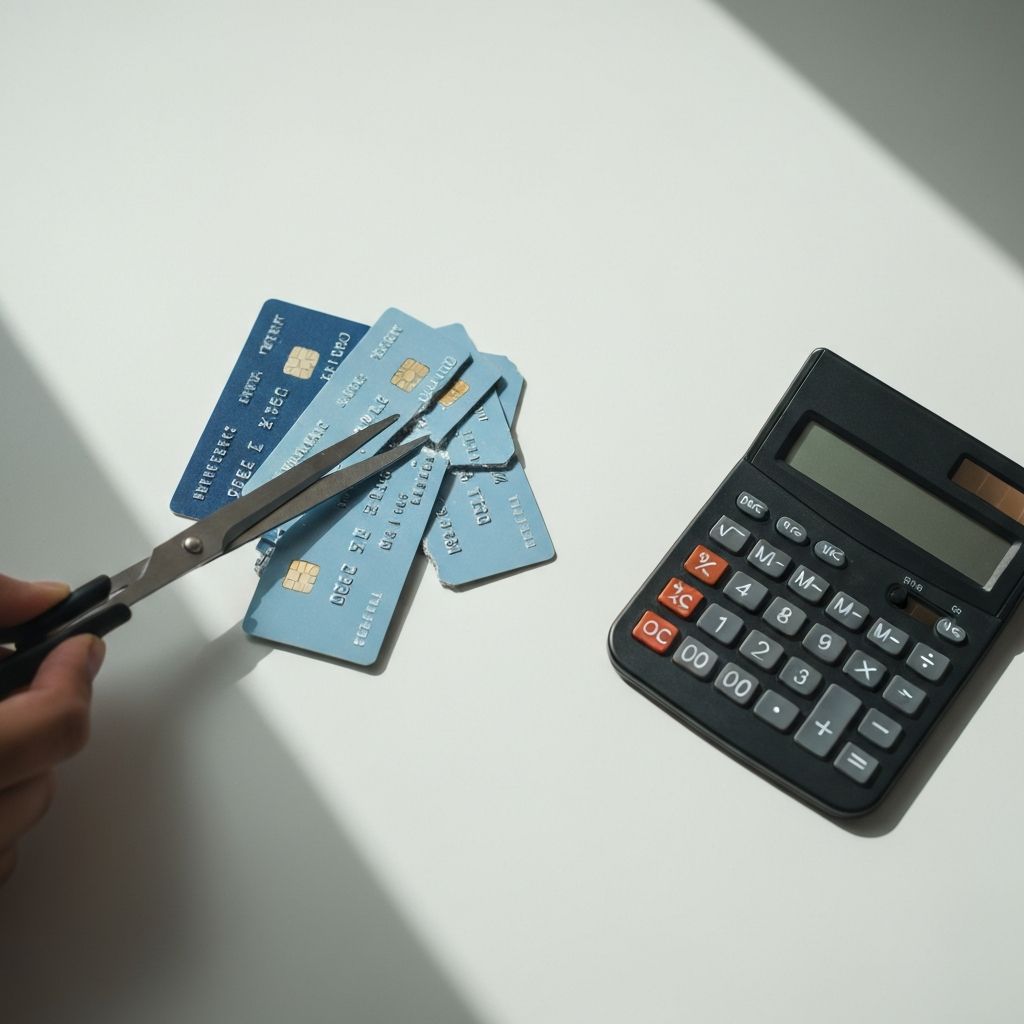
In 2008, I sat across from a woman named Linda — late forties, two kids, recently divorced, nursing $34,000 in credit-card debt across nine cards. The math said she should attack the highest-rate card first (a 28.9% department-store card with a $2,800 balance). She'd been told this by every financial calculator she'd run. She kept failing to do it.
What finally worked was paying off, in order, the smallest balance first. The math was suboptimal by maybe $400 over the life of the payoff plan. The behavioral effect of closing out a card in three months, then another in five, was the difference between a plan she stuck to and a plan she'd been quitting for two years.
I tell that story because the most common mistake in personal-finance advice on debt is treating it as an arithmetic problem. It is partly an arithmetic problem. It is mostly a behavioral problem. Anyone who tells you otherwise has not paid off much debt.
The two methods, briefly
The avalanche method. Pay minimums on everything. Throw all extra money at the highest-interest-rate debt first. When that's paid off, attack the next-highest rate. Repeat.
Mathematically optimal, in the sense that you pay the least total interest. Often by hundreds of dollars over the course of a payoff plan, sometimes by a few thousand for larger debts.
The snowball method. Pay minimums on everything. Throw all extra money at the smallest balance first, regardless of interest rate. Repeat with the next smallest, and so on.
Mathematically suboptimal by a small amount in most cases. Behaviorally superior by a large amount in most cases — at least, that's what the data suggests.
What the research actually shows
A 2016 study by economists at Northwestern's Kellogg School and the University of Texas — "Winning the Battle but Losing the War: The Psychology of Debt Management" — analyzed the actual payoff behavior of thousands of households. The finding wasn't subtle: people who attacked smaller balances first paid off more debt overall, were more likely to remain debt-free, and reported higher motivation throughout. The effect was strong enough that the authors argued the behavioral benefit largely swamped the arithmetic cost.
This is consistent with what I've watched in my office for twenty-plus years. Sticking with a payoff plan for two years is much harder than people pretend it is. A method that gets quick wins keeps people in the game.
That said: if you're confident in your discipline, and especially if your debts are large and the interest-rate spread between them is wide, avalanche is fine. The right method is the one you'll finish.
What to do before you pick a method
Three things, in order:
1. Stop adding to the debt.
This sounds obvious. It is not, in practice, easy. The most common pattern I see is someone aggressively paying off a credit card while quietly running up another one, ending the year with the same total balance and a feeling of having worked very hard.
The clean way to do this is to put the cards somewhere inaccessible — a drawer, a freezer, a sealed envelope — and shift to debit-card or cash spending until the cards are paid off. Removing them from your phone's wallet helps. So does removing the saved card numbers from the websites you shop at. Friction is your friend here.
2. Understand what you actually owe.
Pull every statement. Make a list. For each debt: balance, interest rate, minimum payment, due date. Add it up. Most people, doing this for the first time, are off by 15-30% from what they thought.
The total number is almost always worse than people guessed. Sit with that for a day. Then keep going.
3. Free up money to attack with.
You cannot pay off debt without surplus cash flow. The 50/30/20 budget rule discussion is relevant here: you need to find money. The fastest places to find it, in my experience, are:
- Cancel subscriptions you're not actively using (the typical household has 4-7)
- Renegotiate or shop your insurance (auto, home/renters, sometimes phone) — usually 10-25% savings available
- Cut food delivery and restaurant spending in half temporarily
- Sell things you don't use (this is one-time but can fund the first 1-2 payoffs)
If you can free up even $300-400 a month on top of minimum payments, you can clear $10,000-15,000 in debt in 24-36 months, depending on rates.
The methods, applied
For an example, let's take someone with this debt:
| Debt | Balance | Rate | Minimum |
|---|---|---|---|
| Card A | $1,200 | 18% | $40 |
| Card B | $4,500 | 22% | $135 |
| Card C | $800 | 26% | $30 |
| Card D | $3,200 | 16% | $80 |
| Total | $9,700 | $285 |
Suppose they have an extra $400/month to deploy.
Avalanche order: C ($800, 26%), then B ($4,500, 22%), then A ($1,200, 18%), then D ($3,200, 16%). Total interest paid is the lowest of any ordering.
Snowball order: C ($800), then A ($1,200), then D ($3,200), then B ($4,500). Two debts gone in the first six months, which feels good and tends to keep momentum.
In this particular example, the two methods both attack Card C first (small balance, highest rate — convenient). The real divergence is whether you attack B or A second. The avalanche math saves something like $300-450 in total interest in this case. Whether that's worth the behavioral cost depends on you.
Tactics that genuinely help
Balance-transfer cards, used carefully.
A 0% balance-transfer offer for 18-21 months can save real money — often $1,500-3,000 on a $10,000 balance. The catches: there's almost always a 3-5% transfer fee, which eats some of the savings; the rate goes back to 20%+ after the promo period if you haven't paid it off; and missing a payment usually voids the promo entirely. They're a useful tool for someone with a clear payoff plan and the discipline to execute it. They're a trap for someone who'll just keep spending.
Personal consolidation loans.
A fixed-rate personal loan from a credit union or online lender (SoFi, LightStream, Marcus, the various others) at 8-12% can replace 22-26% credit-card debt with a single fixed monthly payment over 3-5 years. The structure helps with discipline — installment debt is harder to grow — and the rate cut is meaningful. Watch for origination fees; 1-2% is normal, 5%+ is a tell that you're being underwritten as a risky borrower.
Negotiating with the issuer.
Less effective than the internet pretends, but sometimes worthwhile. Call. Be polite. Explain that you're trying to pay it down and ask whether they can lower your rate, even temporarily. Mention that you've received offers from competitors. Roughly 20-30% of the time, you'll get a small reduction. (More often if you have a long history with the issuer and a clean payment record.)
For accounts that are already 60-90 days delinquent, the negotiation conversation is different — debt-settlement territory — and beyond the scope of this article. Get professional help in that situation; the wrong move can do real damage.
What not to do
- Don't take a 401(k) loan to pay off credit cards unless you've exhausted other options and you're confident you'll keep your job. The default risk is real, and the tax consequences of an unpaid 401(k) loan after job loss are brutal.
- Don't use home equity to consolidate credit cards unless you have iron discipline. Converting unsecured debt to debt secured by your house is a serious step. People who do this and then run the cards back up — which is the most common outcome — end up with both debts and a smaller equity cushion.
- Don't enroll in a debt-settlement program advertised on late-night TV. These charge 20-25% of the enrolled debt as fees, advise you to stop paying creditors (which destroys your credit), and produce mixed results. Nonprofit credit counseling — through agencies accredited by the NFCC — is a different and generally more legitimate service.
The boring truth
Most people pay off significant credit-card debt in 24-48 months. There is no faster honest path that doesn't involve a windfall. The plans that work share a few features: a clear list of debts, a fixed extra-payment number, automatic transfers so it happens whether or not you "feel like it" that month, and a method (whichever) the person actually sticks with.
The first six months are the hardest. The middle gets easier as the early balances disappear. The last six months go fast.
I have watched this play out a thousand times. The arithmetic gets a lot of attention. The discipline is what does the work.
Editor & Lead Writer
Rohan Mehta
Writes about money the way he wishes someone had explained it to him in his twenties.
Free newsletter
Get one practical money guide every week.
No spam, no upsells, no recycled content. Unsubscribe in one click anytime.