How to Dispute Errors on Your Credit Report (Step-by-Step)
About 1 in 5 credit reports contains errors that hurt your score. Learn exactly how to find them, dispute them, and force the bureaus to fix them.
 By Ayesha Khan8 min read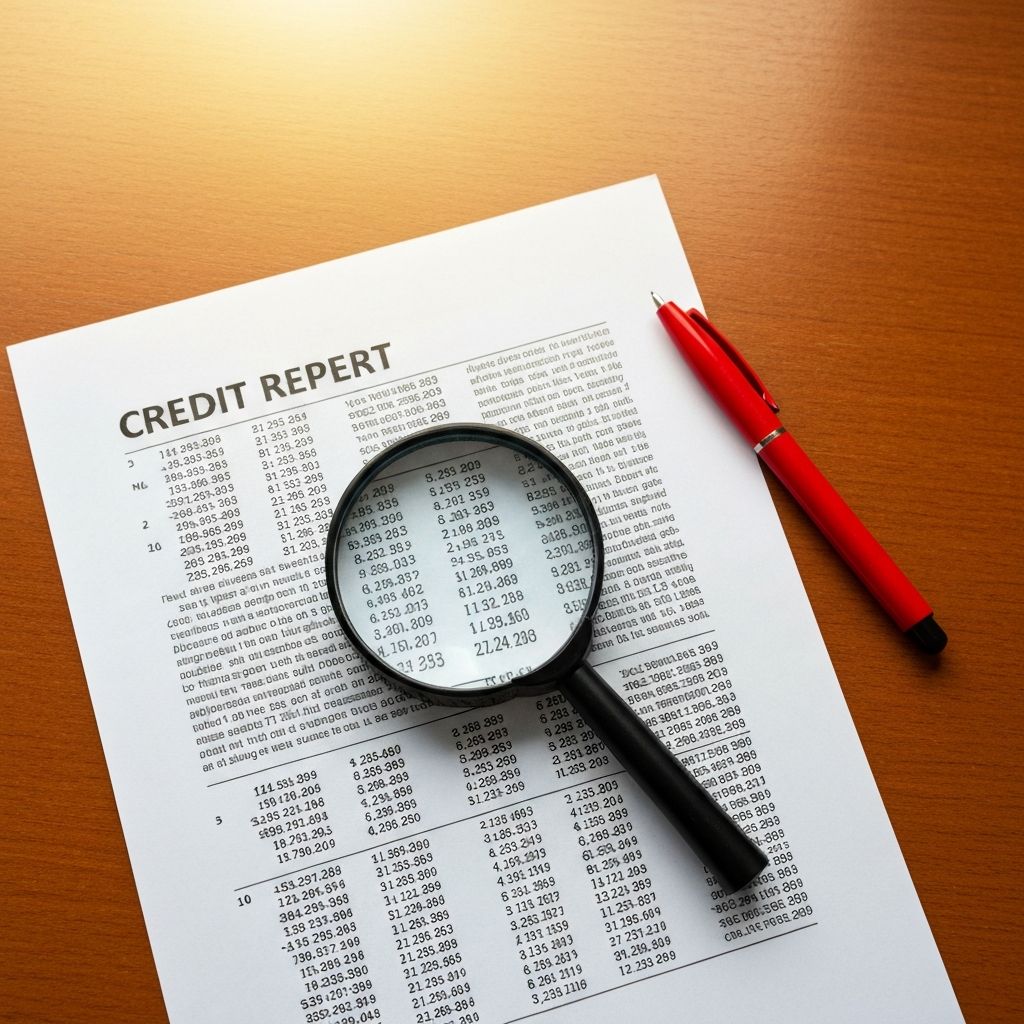
Why This Matters
A 2024 study by the Consumer Financial Protection Bureau found that roughly 20% of consumers have at least one meaningful error on their credit reports. Those errors can lower your score by dozens of points, raise the interest rate you pay on a mortgage by tens of thousands of dollars over its life, and even cause loan or apartment rejections. The good news: federal law (the Fair Credit Reporting Act) gives you the right to dispute errors and forces the credit bureaus to investigate.
Step 1: Get All Three Credit Reports
You're entitled to free credit reports from each of the three major bureaus — Equifax, Experian, and TransUnion — every week through AnnualCreditReport.com. This is the only federally authorized site; everything else is a marketing layer. Pull all three. Errors often appear on one report and not the others.
Step 2: Read Every Line Carefully
Go through each report with a pen and highlighter. Pay special attention to:
- Personal information: Wrong name spellings, wrong addresses, wrong Social Security number, wrong employers.
- Account ownership: Accounts you never opened (possible identity theft), or accounts that belong to someone with a similar name.
- Account status: Accounts marked late or in collections that you actually paid on time.
- Balances and limits: Wrong current balance, wrong credit limit, wrong original loan amount.
- Dates: Wrong date opened, wrong date of last activity (this affects how long negative items remain).
- Duplicates: The same debt listed twice — common when accounts are sold to collection agencies.
- Old items: Most negative items must be removed after seven years; bankruptcy after seven to ten years.
Step 3: Gather Supporting Documents
Before disputing, collect every piece of evidence that proves the error. Examples include:
- Bank statements showing on-time payments.
- Letters from creditors confirming a debt was paid.
- Court records showing a discharged bankruptcy.
- Police reports or FTC identity theft reports for fraudulent accounts.
The more documentation you provide, the harder it is for the bureau to "verify" the disputed item.
Step 4: File the Dispute
You can dispute online, by mail, or by phone. Online is fastest, but mail is more thorough because it creates a paper trail and forces the bureau to handle each item formally.
Online:
- Equifax: equifax.com/personal/credit-report-services/
- Experian: experian.com/disputes/
- TransUnion: transunion.com/credit-disputes/
By mail: Send a dispute letter via certified mail with return receipt requested. Include:
- Your full name, address, date of birth, and last four digits of your SSN.
- A clear list of the items you're disputing — account name, account number, and the specific error.
- The reason for the dispute ("This account is not mine" / "Payment was made on time" / "Balance is incorrect").
- Copies (never originals) of supporting documents.
- A request that the bureau investigate and remove or correct the item.
Step 5: Wait for the Investigation
By law, the bureau must investigate within 30 days (45 days in some cases). They'll contact the company that reported the information and ask them to verify it. One of three things happens:
- The item is corrected or removed. You'll receive a free updated report.
- The item is verified. It stays on your report. You can ask for the bureau's investigation procedure and dispute again with new evidence, or add a "consumer statement" up to 100 words explaining your side.
- The company doesn't respond. If the furnisher fails to verify within the time limit, the item must be removed.
Step 6: Dispute With the Furnisher Too
You can also dispute directly with the company that reported the information (the "furnisher") — your bank, credit card company, or collection agency. They have the same legal obligation to investigate. Disputing in both places at once often produces faster results than either alone.
What to Do for Identity Theft
If the error is from identity theft, take three additional steps:
- File a report at IdentityTheft.gov (FTC) and print the official Identity Theft Report.
- Place a fraud alert (free) and consider a credit freeze (free) on all three bureaus.
- Send the FTC report along with your dispute. By law, items proven to be from identity theft must be blocked.
What You Cannot Dispute
You cannot dispute accurate negative information just because it's hurting your score. A late payment that really was late, a charge-off that really happened, a bankruptcy that really was filed — these will stay until the legal time limit (usually seven years) expires. Be wary of "credit repair" companies that claim to remove accurate items; legally they can do nothing you can't do yourself for free.
Common Mistakes to Avoid
Don't dispute every negative item hoping something falls off — bureaus flag patterns. Don't pay a credit repair company hundreds of dollars to send the same dispute letters you can send yourself. Don't ignore the dispute response letter; if your dispute was rejected and you have new evidence, you can refile.
Final Thoughts
Disputing credit report errors is one of the highest-return uses of your time in personal finance. A single corrected error can raise your score by 20 to 100 points, save you thousands on a future loan, and unlock approvals you wouldn't otherwise get. Pull your reports, find the errors, document everything, and send your disputes. The system is designed to favor consumers who follow the steps — most people just never do.
Contributing Writer
Ayesha Khan
Cares about the boring stuff — spreadsheets, budgets, and reading the fine print on bank statements.
Free newsletter
Get one practical money guide every week.
No spam, no upsells, no recycled content. Unsubscribe in one click anytime.