Sinking Funds: The Budgeting Secret That Eliminates Money Surprises
Sinking funds break large irregular expenses into small monthly savings goals. Learn how to set them up so big bills never destroy your budget again.
 By Ayesha Khan6 min read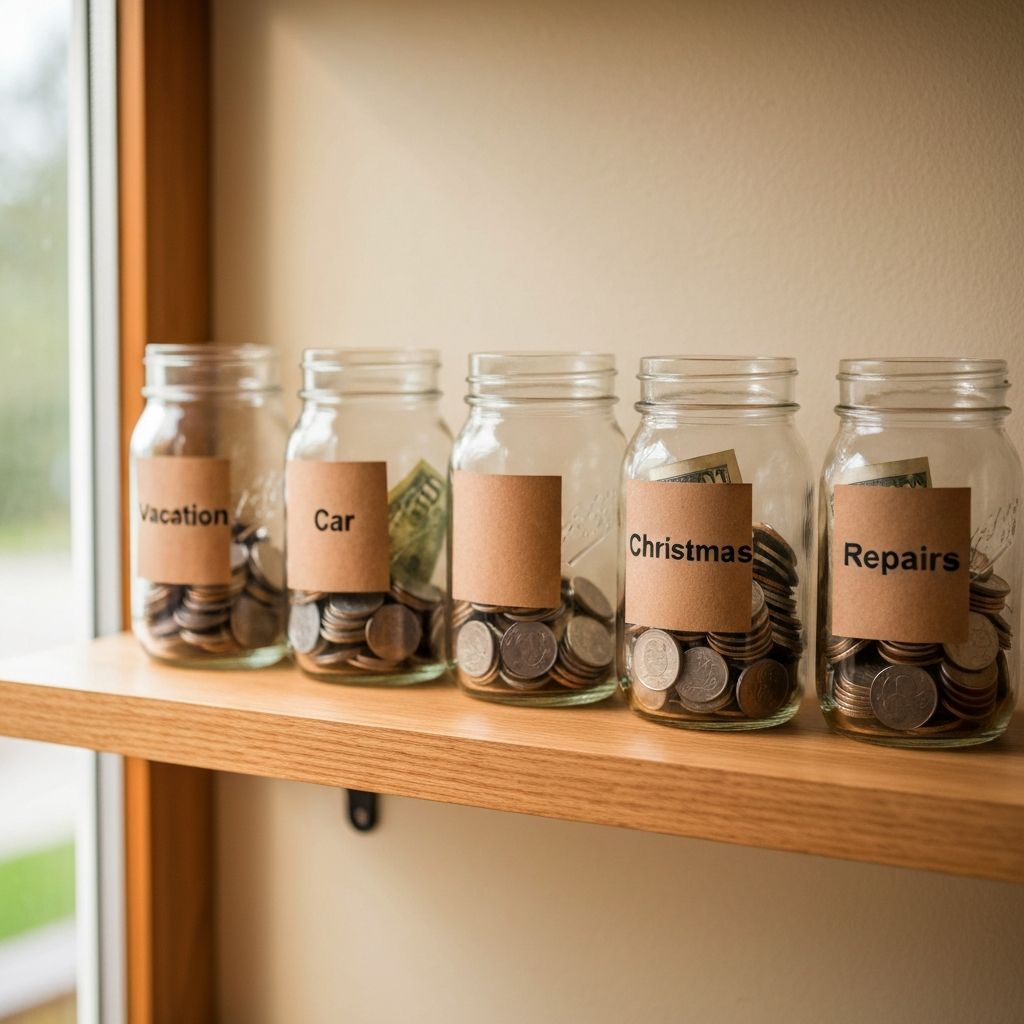
What Is a Sinking Fund?
A sinking fund is a small, dedicated savings bucket for a specific future expense you know is coming. Instead of being surprised by a $1,200 car insurance bill every six months, you save $200 a month into a "car insurance" sinking fund. When the bill arrives, the money is already there. No panic, no credit card, no broken budget.
The term comes from corporate finance — companies sink money each year into a fund to repay future bond debts — but the concept works beautifully for households.
Why Sinking Funds Solve a Real Problem
Most budgets fail not because of small daily overspending but because of big irregular expenses that hit a few times per year: holiday gifts, annual insurance, car registration, vet bills, school supplies, vacations, home repairs, medical co-pays. These don't fit into a "monthly" mindset, so they hit like surprises and force people to either dip into savings or reach for credit cards.
Sinking funds turn every irregular expense into a predictable monthly line item.
How to Build Your Sinking Fund List
Sit down and list every irregular expense you can predict in the next 12 months. Common ones include:
- Holiday and birthday gifts
- Annual or semi-annual insurance premiums (auto, home, life)
- Car maintenance and repairs
- Vehicle registration and inspection
- Property taxes (if not escrowed)
- Vacations and travel
- Annual subscriptions (Amazon Prime, Costco, software)
- Back-to-school supplies and clothes
- Medical and dental out-of-pocket
- Pet care and emergency vet
- Home maintenance (HVAC service, roof, appliances)
- Tax prep fees
For each item, estimate the annual cost based on last year (or a reasonable guess). Divide by 12. That's your monthly sinking fund contribution.
A Practical Example
Sample annual estimates:
- Christmas gifts: $600 → $50/month
- Car insurance: $1,200 → $100/month
- Car maintenance: $600 → $50/month
- Vacation: $1,800 → $150/month
- Annual subscriptions: $240 → $20/month
- Pet expenses: $360 → $30/month
- Home repairs: $1,200 → $100/month
Total: $500/month into sinking funds. That sounds like a lot — but every dollar of it was already going to leave your budget eventually. You're just smoothing it out.
Where to Keep the Money
The cleanest setup is a separate high-yield savings account where each sinking fund is tracked as a "category" within the account. Some banks (Ally, Capital One 360, SoFi) let you create multiple "buckets" or sub-accounts inside a single savings account, so you can see how much is in each fund at a glance. Otherwise, a simple spreadsheet works fine — track the total balance and what portion belongs to each fund.
Avoid keeping sinking funds in your everyday checking account. Money in checking tends to feel "spendable," and the whole point of a sinking fund is that it's earmarked.
How Sinking Funds Differ From an Emergency Fund
An emergency fund covers unexpected, unpredictable expenses — a job loss, a major medical event, an unforeseen home disaster. Sinking funds cover expected, predictable expenses you just don't pay monthly.
Both should exist independently. If you raid your emergency fund every December for Christmas gifts, you don't actually have an emergency fund — you have a holiday fund pretending to be one.
How to Start Tonight
- Open a high-yield savings account if you don't already have one.
- List your top three to five irregular expenses for the next 12 months.
- Calculate the monthly contribution for each.
- Set up automatic transfers on payday — even $25 per fund is a start.
- Track each fund in a simple note app, spreadsheet, or sub-account.
- As one bill is paid, redirect that contribution to a new fund or boost an existing one.
Common Mistakes to Avoid
Don't start with twelve sinking funds at once — pick the three biggest pain points first. Don't dip into one sinking fund to cover another (the system breaks). Don't keep sinking funds in checking. And don't skip months "just this once" — consistency is the entire mechanism.
Final Thoughts
Sinking funds are one of those quiet personal finance habits that don't sound exciting but transform your relationship with money. Big bills stop being emergencies. Christmas stops being stressful. Car repairs stop derailing the month. Set up two or three this week, automate them, and within a year you'll wonder how you ever lived without them.
Contributing Writer
Ayesha Khan
Cares about the boring stuff — spreadsheets, budgets, and reading the fine print on bank statements.
Free newsletter
Get one practical money guide every week.
No spam, no upsells, no recycled content. Unsubscribe in one click anytime.