How I Built an Emergency Fund From Zero (and What I'd Do Differently)
A practical, no-fluff guide to building your first emergency fund — written from someone who actually had to do it on a small income.
 By Rohan Mehta9 min read
The first time I tried to save an emergency fund, I lasted about three weeks. I'd tell myself I was "starting next month," then a friend's birthday or a slightly cheaper flight to somewhere would show up and the plan quietly disappeared. I was twenty-six. I had no real savings, a credit card I was carrying a balance on, and a vague idea that "responsible adults" had emergency funds the way they had life insurance — invisible, important, somebody else's problem.
What changed wasn't a budgeting app or a YouTube video. My fridge died. The repair was around $480, and I remember sitting on the kitchen floor staring at the warm milk thinking, this is the thing everyone has been talking about. The fund. This is what it's for. I didn't have it. I put the repair on the credit card, and that month was the closest I've come to actually deciding to fix the situation.
So I want to write this how I wish someone had written it for me — not as a checklist, but as a step you can actually take this week.
How much do you actually need?
Most articles will throw "three to six months of expenses" at you in the first paragraph. Technically that's correct. Practically, if you're starting from zero, that number is so big it'll make you give up before you start. Don't worry about it yet.
Aim for one thousand dollars first. That's it. One grand sitting in a separate account doing nothing. Once that's done you can think about a full month of expenses, then two, then six. But the gap between zero and one thousand is the only one that really matters in the beginning, because that's the gap where most "small" emergencies live — a tire, a vet visit, a flight home, a fridge.
If you want a number specific to your life, open your bank statements from the last three months and add up the things you genuinely cannot skip: rent, utilities, basic groceries, transport, insurance, minimum debt payments. That's your monthly survival number. The eventual goal is three of those stacked up, but again — start with $1,000.
Get the money out of your main account
This sounds boring but it's the single biggest thing that changed for me. I used to keep "savings" in the same account as my spending money, and predictably I'd see a healthy-looking balance and treat it like spending money. Of course I did. So would you. Of course we all do.
Open a separate high-yield savings account at an online bank. I won't name a specific one because rates change and I don't want this article to be wrong six months from now, but as of writing, decent online savings accounts are paying somewhere around 4% to 5% APY. Look for:
- No monthly fee
- No minimum balance
- FDIC insured
- Easy transfers back to your checking, but not instant — a one or two day delay is actually a feature here, not a bug
The friction is the point. You want to be able to access this money in an emergency, not when you're drunk online shopping at 1 a.m.
Automate the boring part
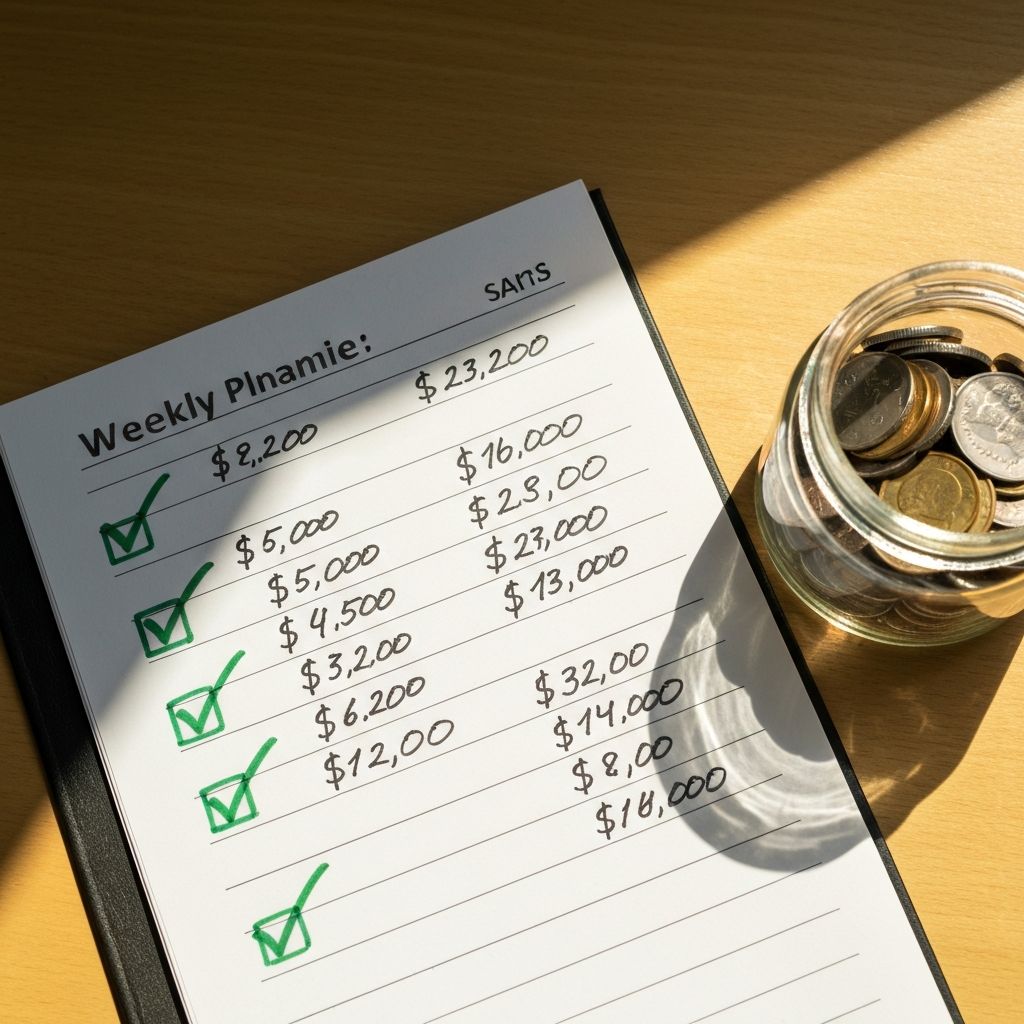
Willpower is unreliable. I learned this the slow, embarrassing way. The thing that finally worked was setting up an automatic transfer the same day my paycheck landed — twenty-five dollars, then fifty, then a hundred. The amount mattered less than the fact that it happened before I saw the money.
If twenty-five a week feels like too much, do ten. If ten feels like too much, do five. I am not joking. Five dollars a week is two hundred and sixty dollars a year, which is more than most people I know have in cash savings. The number is less important than the habit, and the habit only forms if you don't have to think about it.
Where the money actually comes from
I'll be honest, this is where most beginner articles get a little fantasy-coded. They'll tell you to "audit your subscriptions" and act like canceling a $4.99 cloud storage plan is going to fund your life. It's not. But three or four small moves stacked together really do add up. Here's what worked for me, in order of how much they actually moved the needle:
- I called my internet provider and asked for the new-customer rate. This took eleven minutes and saved me about $22 a month. It is the single most boring, highest-ROI phone call I have ever made.
- I sold things I had stopped using. A bike I hadn't ridden in two years, an old monitor, a guitar I'd been pretending I was about to start playing again. About $600 in a couple of weekends.
- I gave myself a 24-hour rule for anything over $50. Most of the time, I forgot I wanted it.
- I switched to a cash-back credit card and routed the rewards directly into the savings account. This only works if you pay it off every month — otherwise you're just paying yourself with money the bank already took from you.
- I stopped pretending the gym membership was an investment in myself. It wasn't. I went four times in eight months.
Notice "make a budget" isn't on this list. Budgets are useful, and we have a whole other piece on the 50/30/20 rule if you want one. But waiting until you have a perfect budget to start saving is just another way of not starting.
Use the windfalls
Tax refunds, bonuses, birthday money, that random $80 someone Venmos you for the dinner you forgot they owed you for. The standard advice is "save your whole tax refund." I think that's a great way to never want to save a tax refund again. Save half. Spend the other half on something that genuinely makes you happy. You're a person, not a spreadsheet.
If you do this consistently for one tax season and one bonus cycle, the $1,000 starter fund tends to mostly build itself.
Define "emergency" before you need to
This is the part nobody warned me about. Once you have a thousand dollars sitting in a separate account, your brain will get extremely creative about what counts as an emergency. A flight deal is not an emergency. A sale is not an emergency. A wedding you've known about for six months is not an emergency.
A real emergency is unexpected, urgent, and necessary. Job loss. A medical thing. A car or home repair you cannot reasonably postpone. Travel for a family crisis. That's basically the list. Write it down somewhere if you have to. I literally taped a sticky note inside my drawer that just said "is it unexpected, urgent, and necessary" because I knew myself.
If you do tap the fund for a real emergency, that's exactly what it's for. Use it without guilt, then start refilling it as soon as the dust settles.
A few mistakes I made
A short list, in case it spares you the same potholes.
- I tried to invest the emergency fund "to make it work harder." Don't. The whole point is that it doesn't move when the market does. Liquid and boring is the goal.
- I kept it linked to my debit card. Took me six months to realize I was treating it like a checking account.
- I stopped at $1,000 and patted myself on the back for almost two years. Eventually a slightly bigger emergency showed up, and a thousand dollars is not a lot of money when something real happens.
- I forgot to recalculate. My rent went up, my expenses went up, my "three months of expenses" target stayed where it was. Recheck the number once a year.
If you do nothing else this week
Open the separate savings account. Move ten dollars into it. Set up an automatic weekly transfer of whatever amount feels almost insultingly small. That's the whole assignment.
The reason most people never build an emergency fund isn't that they can't save money. It's that they wait until they can save the right amount, in the right account, after the right budget, and that day never comes. The fund I have now started with one ten-dollar transfer that felt almost embarrassing. A year later it was four figures. That's the whole secret.
Editor & Lead Writer
Rohan Mehta
Writes about money the way he wishes someone had explained it to him in his twenties.
Free newsletter
Get one practical money guide every week.
No spam, no upsells, no recycled content. Unsubscribe in one click anytime.